
The Marketing Mix: Why the 4 Ps Still Matter (And How We’ve Broken Them)
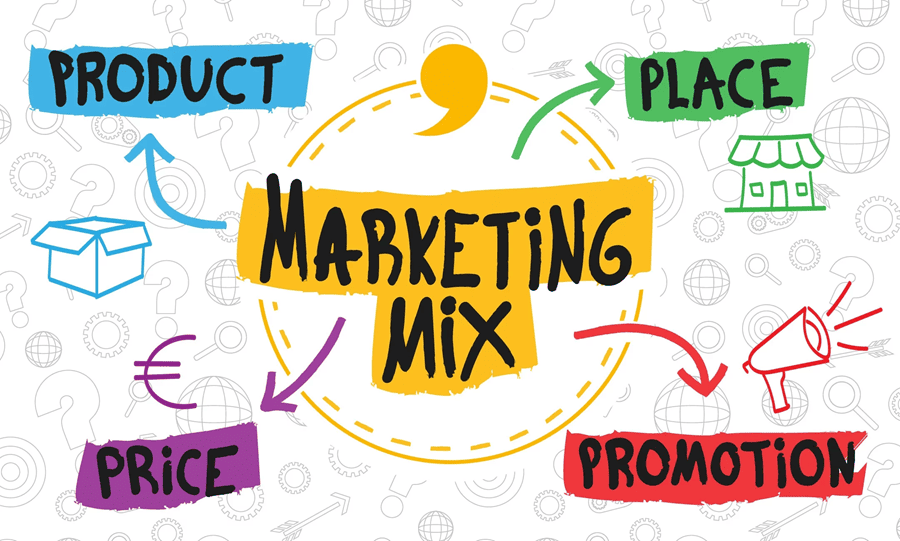
Most businesses treat these as separate departments. The product team builds, the finance team prices, the sales team places, and the marketing team promotes. That is a recipe for a disjointed brand. In 2026, a successful Marketing Mix is a feedback loop where each "P" informs the next.
1. Product: Solving a Headache, Not Just Building a Widget
vIn a world of infinite choice, "Product" is no longer about features; it’s about problem-solving. If your product is just a slightly better version of a competitor's, you aren't marketing, you're just participating. The real questions for 2026 are:- The "What If" Factor: What happens to the customer's life once they have this?
- Differentiation: If you stripped the logo off, would anyone know it’s yours?
- The Ecosystem: Does this product work in isolation, or does it belong to a suite of services?
A product today isn't just the physical object or the code in an app. It's the packaging, the warranty, the ease of setup, and the customer support. If you sell a high-end coffee machine but your instruction manual is unreadable, your Product has failed. We have moved from a "Product-Centric" world to a "Solution-Centric" one. If you aren't removing a specific friction from someone's life, you are just adding to the noise.
2. Price: The Fastest Way to Tell Your Brand Story
Price is the most overlooked marketing tool. It’s not just a number derived from your "cost-plus-margin" spreadsheet. It is a psychological signal. Most founders think that lowering the price is the only way to compete. That’s a race to the bottom where everyone loses.
- Cost-Based Pricing: Traditional and safe. You calculate costs and add a profit. It works for commodities, but it’s boring.
- Value-Based Pricing: This is the 2026 standard. Price based on the perceived value to the customer.
Price tells the customer who you are before they ever touch the product. If you price too low, you aren't "affordable"; you’re "disposable." If you price high, you’re not "expensive"; you’re "aspirational." The gap between your price and your cost is your profit, but the gap between your price and your value is the customer’s incentive to buy. If your marketing doesn't build enough value to justify the price, don't lower the price and fix the marketing.
3. Place (Distribution): The Death of the "Shelf"
In the 1960s, "Place" meant getting your product into a Sears or a local grocery store. Today, "Place" is a complex web of logistics and digital real estate. It’s about being where the customer is when they are in the "buying mood."
- Direct-to-Consumer (DTC): You own the relationship, the data, and the margin. But you also own the shipping headaches and the customer complaints.
- Marketplaces: You trade margin for massive reach. Selling on Amazon isn't a distribution strategy; it’s a partnership with a predator. You get the sales, but they get the data.
- Omnichannel: The customer sees you on Instagram, researches you on their laptop, and buys you in a physical boutique.
If the friction between "wanting" and "having" is too high, your "Place" strategy is broken. In 2026, convenience is the ultimate currency. If I have to click more than three times to buy your product, you’ve effectively "placed" it out of my reach.
4. Promotion: Moving from Shouting to Conversing
Promotion is the "loud" part of the mix, but in 2026, the loudest person in the room is often the one being ignored. We are all "ad-blind" now. We skip YouTube ads, we ignore banners, and we pay for Spotify Premium just to avoid being shouted at.
- The Integrated Mix: You don't just "run an ad." You create a narrative across PR, social media, influencers, and paid search.
- The Budget Trap: Many companies spend all their money on promotion to fix a bad product or a wrong price. That’s like trying to fill a bucket with a hole in the bottom.
Promotion should be the multiplier, not the foundation. If the other 3 Ps are zero, then 0 x Promotion = 0.
The Service Expansion: The 7 Ps
If you are in a service industry (SaaS, consulting, healthcare), the 4 Ps feel incomplete. You can’t put a service in a box. That’s why we added three more:
- People: In services, the employee is the product. One rude customer service agent can undo a $1 million ad campaign. If your staff doesn't believe in the brand, your customers won't either.
- Process: How easy is it to work with you? Is the checkout seamless? Is the return policy clear? If your onboarding takes six weeks, your process is a barrier to entry.
- Physical Evidence: Since services are intangible, customers look for "clues." This is why high-end lawyers have expensive offices and why software companies obsess over "clean" UI. It’s the physical proof that the invisible service is worth the money.
Why the Mix Fails in Most Companies
The 4 Ps fail when they are treated as static decisions made once a year in a boardroom. In reality, the market is a living organism.
The Price-Product Paradox: Sometimes, making a product better doesn't help if the Price makes people think it’s too complex.The Promotion-Place Gap: There is nothing more frustrating than seeing a brilliant ad for a product that is "Out of Stock" or doesn't ship to your region. That is a failure of the Mix.
The Strategy: How to Use the Mix in 2026
Stop looking at these as a list. Start looking at them as a system.
- Start with the Customer (The "C" before the "P"): Don't build a product and then find a price. Find a customer problem, see what they are willing to pay to solve it, and then build the product that fits that price point.
- Audit for Friction: Where is the "Place" failing? Is the "Promotion" making promises the "Product" can't keep?
- Be Cyclical: Traditional marketing was linear. Modern marketing is a circle. You deliver, you get feedback, you update the Product, you tweak the Price, and you go again.
Tactical Depth: Price Psychology
Let's dig deeper into Price. In 2026, we will use Dynamic Pricing. Airlines have done this for years, but now even small Shopify stores use it. If a customer has visited your site four times in two days, they are a "hot lead." Do you offer them a discount to close the deal, or do you keep the price firm because you know they are desperate? This is where the 4 Ps meet Data Science.
Tactical Depth: The "New" Place
Place is now about Context. If you sell energy drinks, "Place" isn't just a gym; it’s a specific gaming stream on Twitch at 2 AM. "Place" is now a digital moment in time. If you aren't there when the impulse hits, you don't exist.
Explain It Like I'm Five
Imagine you want to have a lemonade stand.
- Product: Is it plain lemonade or "Super Strawberry Sparkle"?
- Price: Do you charge 50 cents or 5 dollars?
- Place: Do you put the stand in your driveway or at the park where people are thirsty?
- Promotion: Do you make a big colorful sign or yell "Lemonade!" to everyone who walks by?
You have to get all four right to sell all your lemonade!
The Bottom Line
The 4 Ps aren't a secret formula; they are a map. If you are lost in your marketing, go back to these basics. Most "complex" marketing problems are actually just a failure in one of these four areas.
You don't need a "viral secret" you need a product that solves a problem, priced correctly, placed where people can find it, and promoted in a way that doesn't annoy them. Everything else is just noise. If you master the 4 Ps, you don't just "do marketing"; you build a business that actually makes sense to the person holding the wallet.